
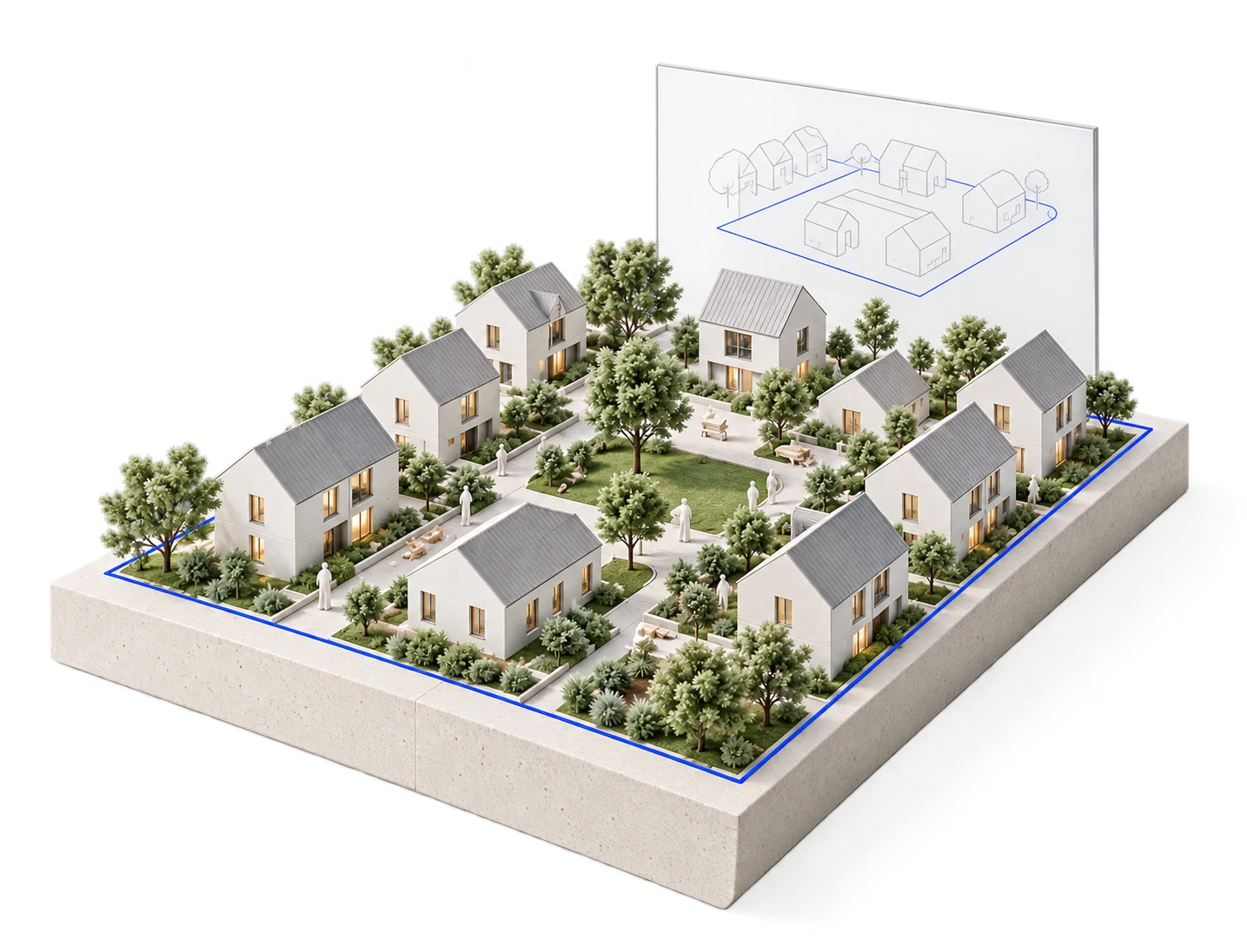
The houses are new. The promise needs testing.
A house can be new without being an addition. It can become cheaper to finance without becoming cheaper to rent. And it can give a family a front door without giving them a deed.
These are not contradictions. They are different questions hiding inside the same phrase: build-to-rent.
Imagine two households looking at the same newly built street. This is a thought experiment. One wants a house with enough room for a child and a parent, but cannot assemble a down payment. The other has been saving to buy and wants a neighborhood where an ordinary house is still for sale. A rental community might open the street to the first household while leaving the second searching elsewhere.
Neither household is mistaken about what it needs. Neither experience, by itself, tells us whether the policy behind the street has worked.
On October 14, 2026, HUD opened two FHA multifamily mortgage-insurance programs to qualifying build-to-rent communities. Detached houses, duplexes and triplexes can be part of an eligible rental property. The change takes effect immediately.
The announcement offers a route to more housing. It does not yet offer evidence of how many additional homes will result, what their rents will be or which households will benefit.
That is where the interesting story begins. Not with a choice between loving or hating landlords, but with a chain of consequences that can be followed, measured and sometimes interrupted.